This morning I took a local train westwards along the coast to Mihara, caught a Shinkansen to Hiroshima and walked to my hotel, the very modern and swish Knot Hotel, not far from the peace park. My room has an interesting view over a wide, bustling intersection. Here is an interactive photo.
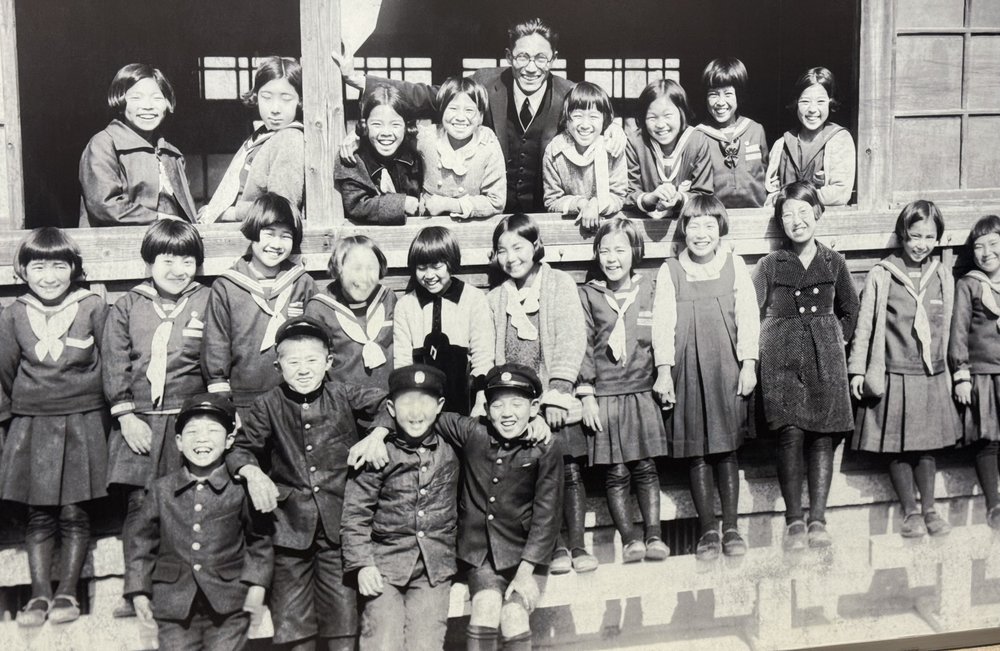
I took the tour in the Hiroshima Peace Memorial Museum which was very moving. For example, the image below was from the first section, devoted to photos taken before the bomb was dropped. You can’t help thinking these were just ordinary people leading ordinary lives.
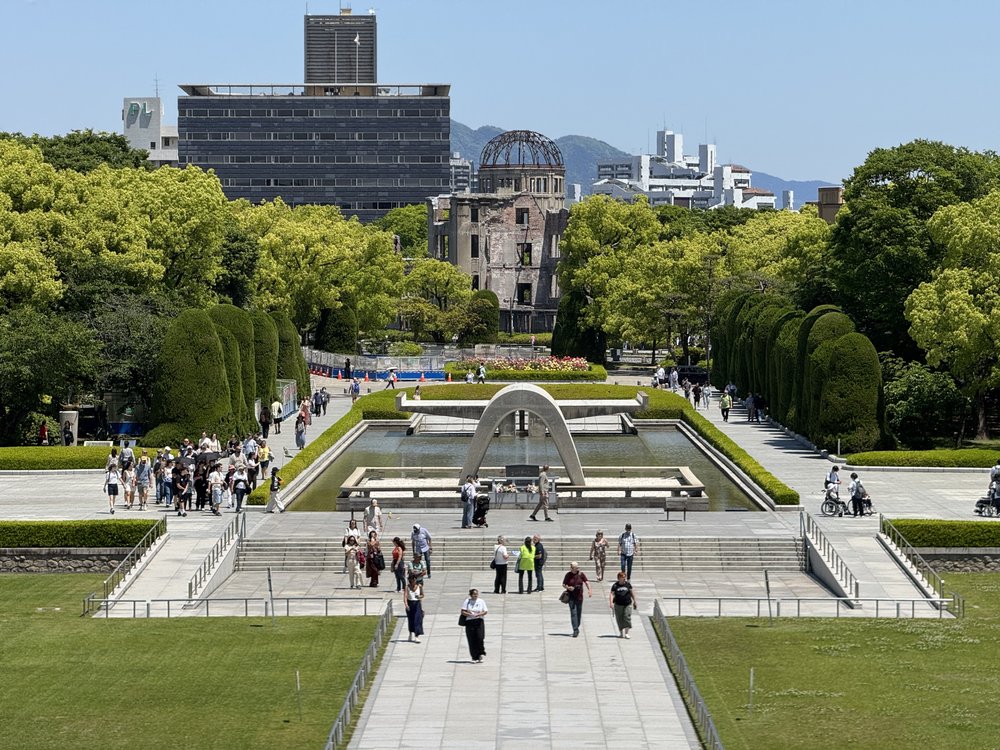
Then I walked through the Hiroshima Peace Memorial Garden (see photo below) to the A-Bomb Dome (see video below).
Next I walked up the sloping pathway of the Orizuru Tower building right next to the dome. Later I came down a bit faster than I went up (see video).
The name Orizuru comes from origami paper cranes (zuru in Japanese) which became Hiroshima’s symbol for peace because of Sadako Sasaki, a young girl who was a victim of the atomic bomb and became famous for her efforts to fold a thousand paper cranes.
Here is an interactive photo of the view from the top of the tower.
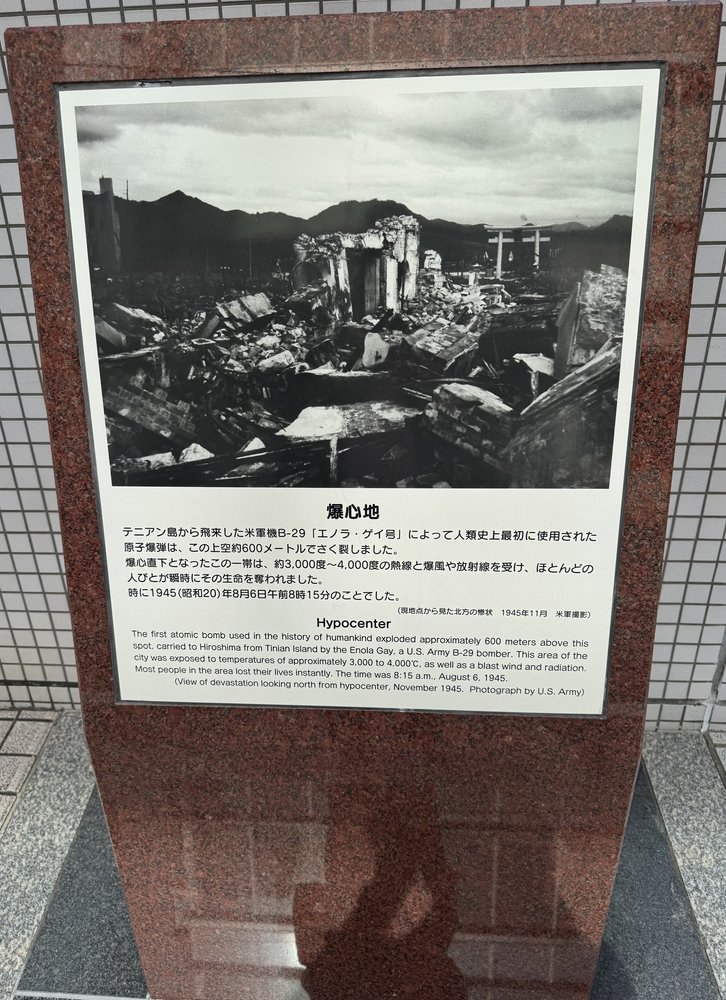
The bomb exploded at about 600 metres above the city. This altitude was deliberately chosen to maximise the blast wave’s destructive radius at ground level — detonating higher up spreads the energy over a wider area than a ground burst would. Below is a memorial panel marking the hypocentre (the approximate position on the ground directly below the explosion).