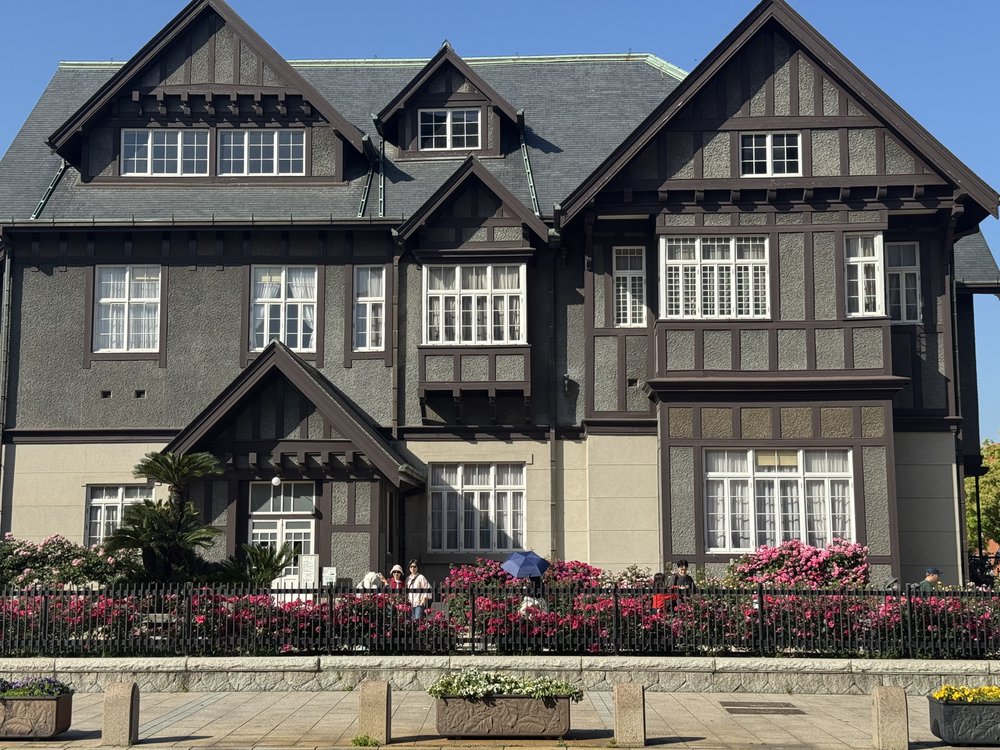
While searching for a hat shop in Mojiko I stumbled into a suburban area on the side of a hill away from the main centre where there were some older, wooden houses.
I could only find a ladies' hat shop in Mojiko, so I left that until I got to Kokura, ten minutes away by train and, like Moji, a former city which is now a ward of Kitakyushu. There were plenty of shops there, and I was spoilt for choice when it came to hats.
I then walked on to Kokura Castle, initially built in 1608, burnt down in 1866 during an inter-clan war, and reconstructed between 1959 and 1990.
Returning to Mojiko, I took a picture on the station platform.
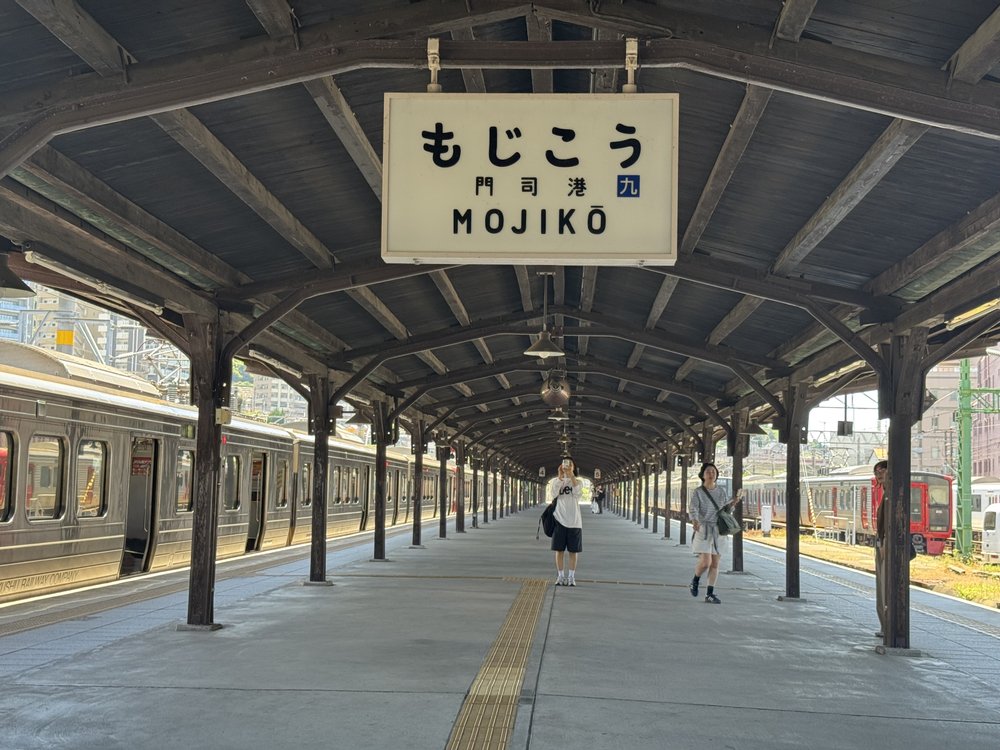
In 1988, Mojiko became the first railway station building to be designated as an Important Cultural Property of Japan. It was built in 1914 and restored in 2019. The entrance design was inspired by the character 門 (gate), the first character of 門司港 (Mojiko). It is one of the few remaining wooden stations in Japan, most of the others having been demolished and replaced.
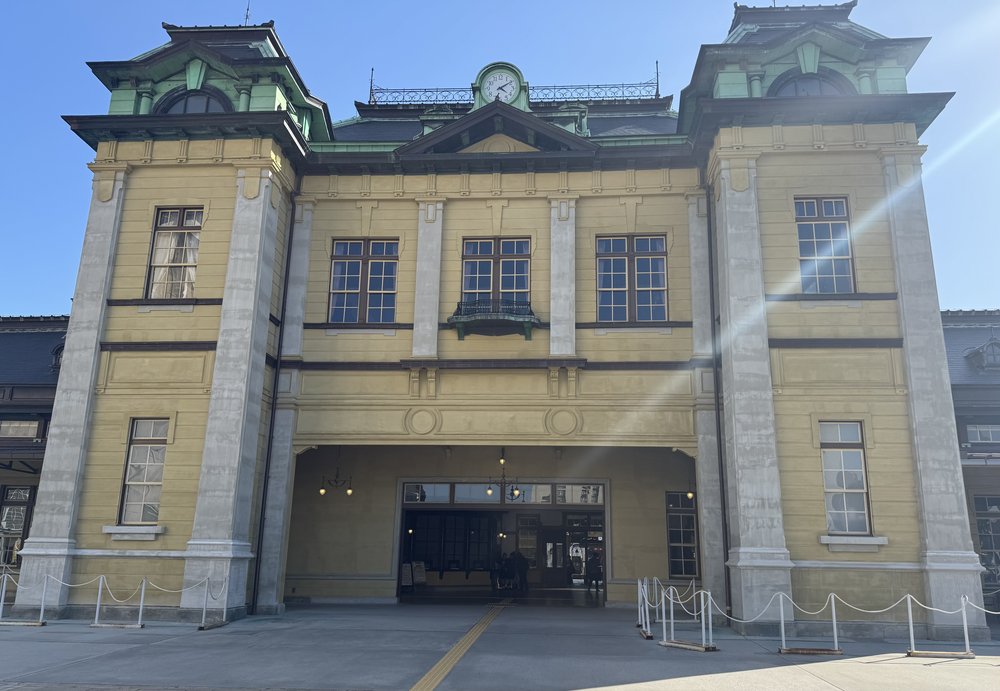
Starting in 1889, Mojiko became an important trading port. Its golden era (1890s–1930s) coincided with Japan’s modernisation, when Western architectural styles were enthusiastically adopted as a symbol of Japan’s emergence as a modern nation. European trading companies, shipping firms, and banks established offices here, constructing grand Western-style buildings. Decline came in the early 1940s with the opening of the Kanmon railway tunnel and the building of a larger new port nearby. The architectural treasures fell into neglect but, crucially, they weren’t demolished either. In 1988 the Mojiko Retro preservation project recognised their value and transformed them into a tourist asset.
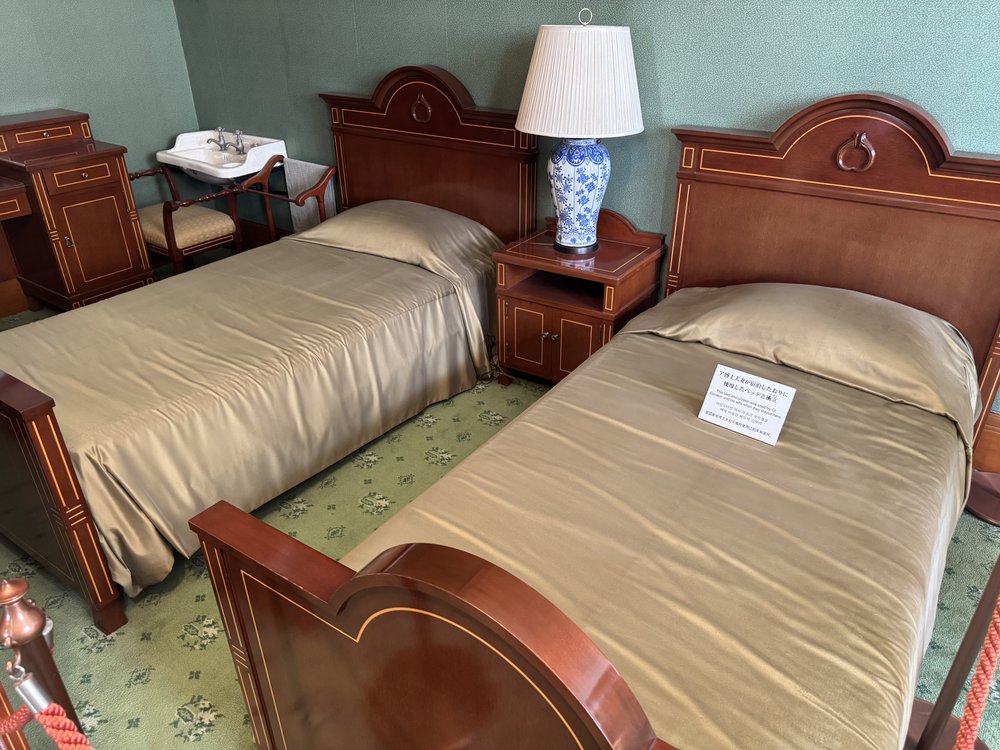
One of these buildings is the former Moji Mitsui Club, a social club for the Mitsui zaibatsu. Though it started as just a kimono shop, at its peak Mitsui was one of the largest trading conglomerates in the world. Toyota and Toshiba are both former members of the group. In 1922 Albert Einstein and his wife stayed for a few days in this building as part of a lecture tour of Japan.